Key Takeaways
Choose District V for a first Budapest visit, VI for culture and connections, VII for nightlife, XIII for residential life, and I for historic Buda surroundings.
- Micro-location: The exact street, building, and bedroom position matter more than the district’s reputation. Buda is not always quiet, and Pest is not always noisy.
- District I — Várkerület: Best for historic scenery and a slower-paced stay. Check hills, steps, shopping, and the final walk from transport.
- District V — Belváros–Lipótváros: A convenient first-visit base near major sights and the Danube. Expect a location premium and tourism on prominent streets.
- District VI — Terézváros: Good for the Opera, Andrássy Avenue, and central connections. For short stays, verify the accommodation’s legal category because restrictions introduced in 2026 affect covered private apartment rentals—not hotels generally.
- District VII — Erzsébetváros: Ideal for restaurants and nightlife, but check late-night noise before booking or signing a lease.
- District XIII — Újlipótváros, Angyalföld, and Vizafogó: A strong starting point for longer stays. Újlipótváros offers neighbourhood cafés and riverside access; other areas vary in character and distance from the centre.
- Before committing: Compare total costs, test your actual commute, inspect access and facilities, and visit at different times.
For a holiday, prioritise the experiences you want nearby. For a home, prioritise the ordinary week you will repeat.
Budapest Neighbourhood Guide: Districts I, V, VI, VII and XIII Compared
Choose District V for a straightforward first Budapest visit, District VI for cultural attractions and central connections, District VII for nightlife, District XIII for everyday residential life, and District I for historic surroundings on the Buda side.
That is the useful starting point—not the final decision.
Budapest’s neighbourhoods change from street to street. A courtyard apartment in busy Pest can be quieter than a river-facing room beside a main road in Buda. A beautiful Castle District address can also involve more climbing and less convenient shopping than the photographs suggest.
The decisive factor is micro-location: the building, bedroom position, nearest transport stop, and streets you will actually use.
This guide compares Districts I, V, VI, VII, and XIII for both holidays and longer stays. It is designed for Americans and Brits who want to understand not only where Budapest looks appealing, but where daily life will feel comfortable.
Accommodation rules and transport information reflect October 2026.
Buda vs. Pest: Understand the Difference
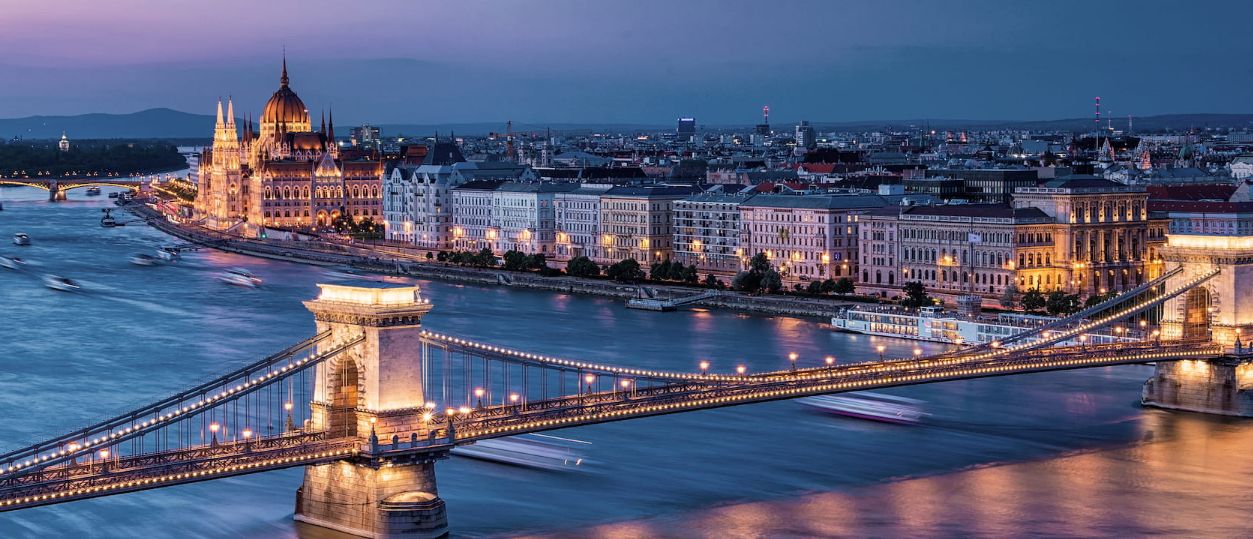
The Danube separates Buda on the west bank from Pest on the east.
Buda contains the Castle District and much of the city’s hillier landscape. Pest contains the Parliament, central shopping streets, the Opera, and much of the best-known nightlife.
“Buda is peaceful; Pest is lively” is a useful shorthand, but it hides important differences.
District I includes heavily visited historic streets, busy transport corridors, and lower residential areas. Pest includes quiet streets, parks, and neighbourhood cafés as well as entertainment districts.
For a Holiday
Your priority is usually access to the places you want to visit, with minimal friction between sightseeing, meals, and your accommodation.
Central Pest often makes that easier, particularly on a short first trip.
For a Longer Stay
Your priorities shift toward groceries, commuting, laundry, noise, building condition, and access to green space.
A location that feels exciting for three nights may feel exhausting after three months. Conversely, an area that looks less dramatic in a travel photograph may offer a more satisfying routine.
Budapest Districts at a Glance
| District | Main character | Strongest holiday appeal | Strongest residential appeal | Main compromise |
|---|---|---|---|---|
| I: Várkerület | Historic Buda, slopes, and riverside areas | Castle sights and atmospheric surroundings | A calmer base in selected streets | Hills, visitor traffic, and uneven convenience |
| V: Belváros–Lipótváros | Central, established, and walkable | Easy access to major Pest sights | Centrality without living in the main party quarter | Premium locations and tourism |
| VI: Terézváros | Cultural avenues and dense urban streets | Opera, Andrássy Avenue, and transport | Central living with varied street character | Traffic, building differences, and rental restrictions |
| VII: Erzsébetváros | Jewish heritage, dining, and nightlife | Restaurants and evening entertainment | An active urban lifestyle | Night noise in the entertainment core |
| XIII: Újlipótváros, Angyalföld, and Vizafogó | Residential streets and newer developments | A less sightseeing-led stay | Everyday amenities and repeatable routines | Greater variation in distance from the centre |
These are qualitative comparisons, not official rankings. The exact address can outweigh the district’s general reputation.
District I: Historic Buda With More Than One Personality
District I is often described simply as the Castle District.
Its best-known attractions include Buda Castle, Matthias Church, and Fisherman’s Bastion. However, the administrative district also includes lower areas such as Víziváros and Krisztinaváros.
That distinction matters when booking accommodation.
A property “in District I” is not necessarily inside the elevated historic quarter, and a river-level apartment does not offer the same experience as a hotel near Matthias Church.
Why Stay Here?
Choose District I if historic surroundings, architecture, and a less nightlife-focused evening atmosphere are priorities.
The Castle area can feel particularly appealing before and after the busiest sightseeing periods.
For couples who prefer an early dinner and a scenic walk to late-night bars, it deserves serious consideration.
What Are the Trade-Offs?
Slopes, steps, cobbles, and the final walk from transport can matter more than the distance shown on a map.
A short-looking route may be inconvenient with luggage, a pushchair, or limited mobility.
Do not assume that an elevated position guarantees silence. Tourist groups, deliveries, traffic, and building works can affect particular addresses.
Is District I Good for Expats?
Potentially, especially if your work or daily destinations are on the Buda side.
For longer stays, compare lower residential streets with the Castle area rather than treating the district as one market.
Check where you will buy groceries, collect prescriptions, and travel on an ordinary weekday. Choose the routine first and the panorama second.
District V: The Most Straightforward First-Visit Base
District V, Belváros–Lipótváros, occupies a central stretch of Pest beside the Danube.
Its familiar sights include Parliament, St Stephen’s Basilica, Váci utca, and the river promenade.
It is a strong default for visitors who want a recognisable, convenient Budapest base without making nightlife the centre of the trip.
Belváros vs. Lipótváros
The southern Belváros area includes prominent shopping and visitor streets.
Farther north, Lipótváros includes the Parliament area and a mixture of institutional, residential, and commercial buildings.
Neither is uniformly busy or quiet. Look at the precise street and whether the room faces traffic, a restaurant terrace, or an internal courtyard.
Why Stay Here?
For a short first visit, District V reduces the need to think constantly about transport.
You can combine central sights, meals, and riverside walks without repeatedly crossing the city.
It also suits travellers who value returning to their room between activities.
Is It Good for Living?
District V can work for professionals who prioritise central access and are comfortable paying for the location.
However, do not confuse prestige with practicality. Some older buildings have inconvenient stairs, limited storage, or apartments whose renovation is more cosmetic than functional.
Tourist-oriented streets may also offer a different everyday experience from quieter residential blocks.
Inspect the building as carefully as the apartment.
District VI: Culture, Connections, and Street-by-Street Variety
Terézváros is associated with Andrássy Avenue, the Hungarian State Opera, Oktogon, and the area around Nyugati station.
It offers a useful middle ground between District V’s landmark centrality and District VII’s nightlife identity.
However, a grand avenue address and a side-street apartment can feel very different.
Why Stay Here?
District VI suits visitors who want theatres, cultural attractions, restaurants, and convenient connections.
The M1 metro follows the Andrássy corridor, while the Grand Boulevard provides further transport options around Oktogon.
Do not assume every property is equally close to these routes. Check the actual walk rather than the listing’s “central location” label.
An Important 2026 Accommodation Rule
Since 1 January 2026, District VI has set the annual permitted operating days for the legal categories magánszálláshely and egyéb szálláshely at zero.
This affects private and other non-hotel accommodation categories covered by the ordinance. It is not a blanket closure of hotels.
For a holiday, verify the establishment’s legal accommodation category rather than assuming an apartment-style listing is permitted because it appears on a major platform.
For a longer residential lease, distinguish ordinary housing from short-term tourist accommodation. They are not the same activity.
Is District VI Good for Expats?
It can be an excellent candidate for people who want urban convenience without choosing the centre of the party quarter.
Nevertheless, assess traffic, ventilation, daylight, and sound insulation. A high-ceilinged apartment can be attractive but uncomfortable if the heating or windows are poor.
The district rewards careful building selection.
District VII: Vibrancy With a Noise Trade-Off
Erzsébetváros contains much of Budapest’s best-known Jewish Quarter and nightlife scene.
The inner area includes Dohány Street Synagogue, dining streets, ruin bars, and entertainment around places such as Kazinczy utca and Gozsdu Udvar.
That combination makes it appealing—and unsuitable for some visitors.
Why Stay Here?
Choose inner District VII if restaurants, bars, and late evenings are central to your plans.
You can finish dinner and continue exploring without a long journey home.
It is particularly useful for groups whose schedules revolve around evening entertainment rather than early starts.
Why Might You Regret It?
Noise is not limited to music from a bar.
It can include pavement conversations, returning guests, deliveries, waste collection, and sound travelling through shared courtyards.
“Quiet apartment” is not enough information. Ask which direction the bedroom faces and whether the building contains bars or several short-stay units.
Visit after dark before committing to a long lease.
Inner vs. Outer District VII
The entertainment-heavy inner district does not represent every street in Erzsébetváros.
Areas farther from the best-known nightlife cluster can offer a different residential balance.
Still, a position outside the main bar streets does not eliminate traffic or building noise.
Is It Good for Living?
District VII can suit people who genuinely enjoy dense urban activity.
It is less obvious for anyone who needs predictable silence for sleep or home working.
Do not choose it solely because a holiday there was enjoyable. Test whether you would like the same environment on a working Tuesday.
District XIII: Everyday Budapest Beyond the Tourist Core
District XIII is a strong starting point for prospective expats, especially those considering Újlipótváros.
The district also includes Angyalföld and Vizafogó, with different housing types, street patterns, and distances from central Pest.
“District XIII” is therefore too broad to be a complete recommendation.
Újlipótváros: Established Residential Life
Újlipótváros offers neighbourhood cafés, residential streets, and access to the Danube.
Pozsonyi út is a useful starting point for exploring its everyday atmosphere. Szent István park provides green space near the river.
This is a good area to test a simple question: can you imagine enjoying an ordinary week here?
For many longer-stay visitors, that is more useful than counting nearby monuments.
Angyalföld and Vizafogó
These areas include a wider mix of older housing, modern apartments, offices, and redevelopment.
They may suit people who prioritise newer buildings or a particular workplace.
The M3 corridor along Váci út is important for connectivity. However, the walk to the station can make a substantial difference.
Avoid assuming that every XIII address has Újlipótváros’s character or its proximity to central landmarks.
Why Stay Here on Holiday?
District XIII suits repeat visitors, longer stays, and travellers who prefer a residential base.
The compromise is that sightseeing may require more deliberate transport planning.
For a two-night first visit, District V may be more efficient. For several weeks, the everyday amenities of a well-chosen XIII address can matter more.
Which District Offers the Best Value?
Value depends on what you use.
District V and prime Castle-area properties often carry a location premium. Yet a cheaper room farther away may lose its advantage if you need frequent taxis.
Similarly, a new apartment in District XIII is not necessarily cheaper than an older central flat.
Compare equivalent properties:
-
Similar floor area.
-
Comparable condition.
-
The same number of bedrooms.
-
Similar furnishing and equipment.
-
Equivalent cancellation or lease terms.
-
Total costs rather than advertised rent.
For longer stays, request the common building charge and previous utility bills.
For holidays, compare the complete booking price, including any cleaning charges and applicable local taxes.
Avoid district-wide “average prices” unless the source explains whether they cover hotels, studios, entire apartments, or different rental lengths.
Transport: Compare Journeys, Not Riverbanks
Living in Buda does not automatically mean poor connections. Staying in Pest does not automatically mean every journey is walkable.
Relevant starting points include:
-
District I: Batthyány tér and connections serving the Castle area.
-
District V: central metro interchanges and riverside routes.
-
District VI: M1, Nyugati, and the Grand Boulevard.
-
District VII: nearby metro access and boulevard services, depending on the address.
-
District XIII: M3 and connections around Jászai Mari tér.
Use BudapestGO to compare the actual door-to-door journey at the time you will travel.
Include the walk to the stop, transfers, and the final climb or staircase.
Airport Convenience
The 100E Airport Express connects the airport with Deák Ferenc tér in central Pest.
That can favour some central addresses, but it does not provide a direct journey to every property in Districts V, VI, or VII.
With luggage, compare the whole route. A direct taxi or arranged transfer can be more practical for an elevated Buda address or a late arrival.
Families, Accessibility, and Remote Work
Families
For a residential starting point, consider Újlipótváros and selected quieter streets elsewhere.
However, choose around the specific school, childcare arrangement, or daily destination. A district described as family-friendly can still create an awkward school run.
Ask about lifts, pavement conditions, bedroom separation, and secure storage.
Reduced Mobility
Flat-looking central Pest may be easier to navigate than Castle Hill, but building access remains crucial.
A “lift available” listing does not tell you whether steps precede the lift or whether it reaches the apartment’s level.
BKK provides accessible journey-planning options. Check the accommodation entrance separately.
Remote Workers
Prioritise a proper workspace, tested internet, comfortable temperature, and predictable noise.
A picturesque café nearby does not compensate for unreliable connectivity at home.
For US and UK citizens, accommodation and immigration permission remain separate matters. Do not assume that booking a long stay authorises remote work or residence.
A Simple Neighbourhood Test Before Signing a Lease
Visit shortlisted addresses at three different times: a weekday morning, an evening, and a later weekend period.
Then complete ordinary tasks:
-
Walk to the nearest useful grocery shop.
-
Test the journey to work or another regular destination.
-
Locate a pharmacy.
-
Check rubbish and recycling arrangements.
-
Listen from the bedroom with windows open and closed.
-
Inspect shared entrances, stairs, and lifts.
-
Assess daylight and ventilation.
Ask about nearby renovation work and planned building repairs.
For Americans, check air conditioning and laundry arrangements rather than assuming familiar equipment. For British renters, examine heating, window condition, and the complete monthly cost rather than relying on the apartment’s size.
An attractive address should survive a practical inspection.
Match the District to Your Actual Trip
First Visit of Two or Three Nights
Start with District V. It offers a straightforward introduction without requiring a detailed understanding of the city.
Cultural Weekend
Consider District VI, particularly a properly registered hotel with convenient access to your planned venues.
Nightlife-Focused Break
Choose inner District VII, but make a deliberate decision about how much noise you will accept.
Scenic, Slower-Paced Stay
Consider District I. Confirm the walking gradients and transport before booking.
Several Weeks or a Trial Move
Start by exploring Újlipótváros in District XIII, then compare it with suitable streets in VI, V, or lower District I.
These are starting recommendations, not rules. Your exact property can change the ranking.
The Best Approach: Stay First, Then Commit
If you are considering relocation, use temporary accommodation to test two contrasting routines.
Spend time in central Pest, then explore a residential area or lower Buda. You do not necessarily need to move hotels; ordinary daytime and evening visits can reveal a great deal.
Keep notes on groceries, journeys, noise, and how often you feel the need to leave the neighbourhood.
For holidays, optimise access to the experiences you value. For living, optimise the week you expect to repeat.
Pest does not require you to choose constant excitement, and Buda does not guarantee tranquillity. Budapest offers both qualities on either bank—the task is finding the right street, building, and daily rhythm.
Accommodation regulations and transport arrangements can change. Confirm the legal category of short-stay accommodation and check current routes before booking. Long-term residence and work rights require separate assessment.
Sources
District Character and Local Geography
- Budapest by Locals — District Guide, Castle District, Central Pest, and Jewish Quarter
- Budapest Tourism — Comparison of Districts I, V, VI, VII, and XIII
- Újlipótváros — Neighbourhood Geography and Szent István Park
- District XIII — District Geography and the Váci út Transport Corridor
Accommodation Regulation
Public Transport and Accessibility