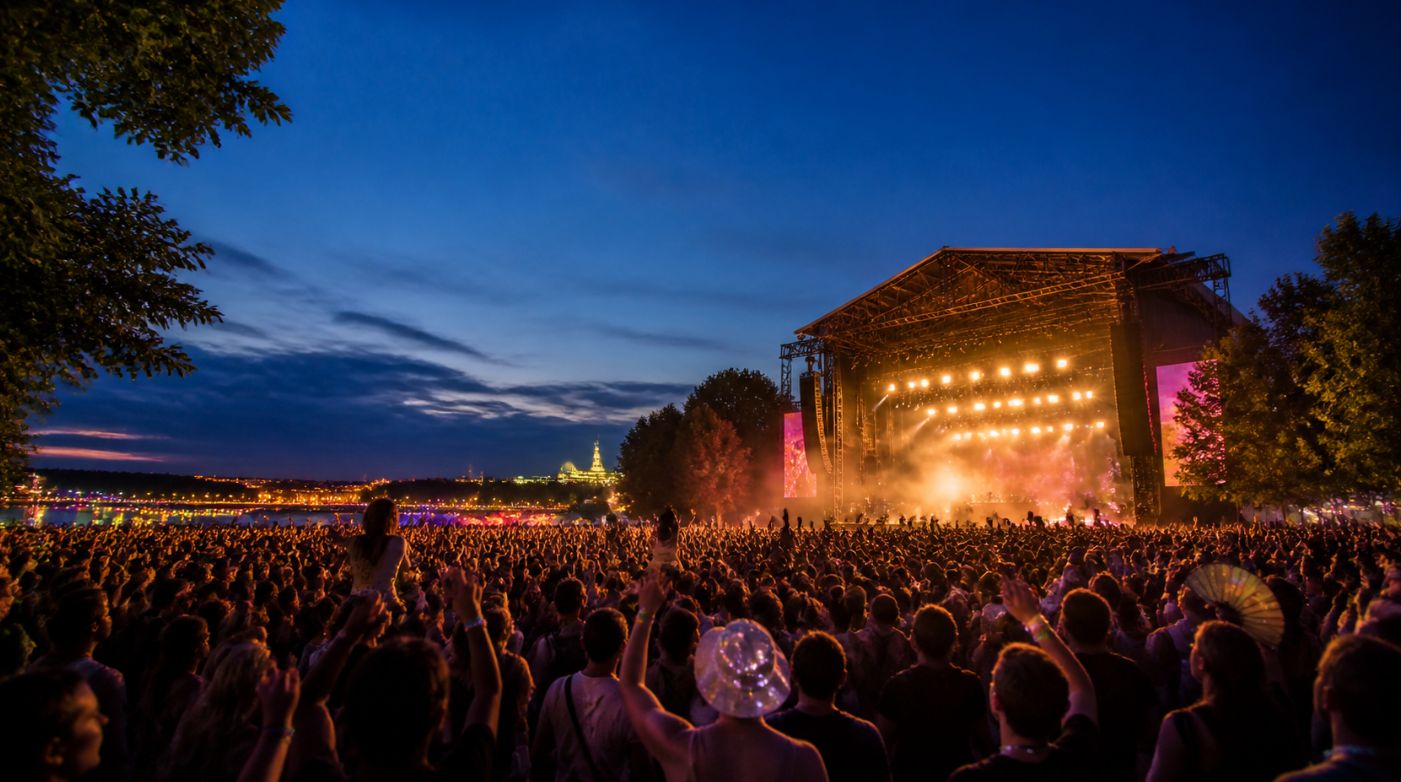
Sziget Festival, known in Hungarian as Sziget Fesztivál, is much more than a major music event in Budapest. Held on Óbudai-sziget, a green island in the River Danube, it has grown from a modest post-socialist student gathering into one of Europe’s most recognisable cultural festivals. For visitors from the UK, Sziget is often described as a destination festival: a place where discovering Budapest is as important as seeing the artists on stage.
The festival’s name translates simply as “Island Festival”, but its identity has always been larger than that. Sziget is associated with creative freedom, international audiences, alternative culture and the energy of a city that has spent more than three decades redefining itself after communism. Its long-standing “Island of Freedom” concept is not just a marketing phrase. It reflects why the event was founded, why it became significant in Hungary, and why it continues to attract music fans from across Europe.
This is a festival that works on several levels. It is an outdoor music event with major international headliners; an introduction to Budapest for first-time visitors; a platform for Hungarian performers and creative communities; and a temporary multicultural neighbourhood shaped by thousands of people from different countries. Its importance comes from that combination. Sziget is not simply a concert series in a field. It is one of the events that has helped make Budapest a credible and compelling European city-break destination for a younger, internationally minded audience.
From Student Island to European Festival
Sziget Festival began in 1993, during a period of rapid social, economic and cultural transition in Hungary. The fall of the communist system had created a new sense of possibility, but it also disrupted many institutions and funding models that had supported youth and cultural life. Budapest’s established summer festival scene was struggling, and there was a clear gap for an event that could bring people together through music, art and shared experience.
The original festival was called Diáksziget, meaning Student Island. It was created by a group led by musician and cultural figure Péter Müller Sziámi and festival organiser Károly Gerendai. The first event was held on Óbudai-sziget, an island in northern Budapest that remains the festival’s home. This location was important from the beginning. An island feels separate from the routines of city life, but Sziget is still connected to Budapest through public transport, bridges and the wider urban landscape.
In its early years, the festival was strongly rooted in Hungary’s domestic alternative, rock and youth culture. It gave local musicians and audiences a new gathering point at a time when cultural expression was changing quickly. The initial event was not designed as a polished international product. It had the energy of a grassroots experiment: ambitious, imperfect and driven by the idea that Hungary needed a new kind of summer cultural meeting place.
That context still matters. It is easy to look at today’s large-scale stages, international line-ups and global marketing and assume Sziget was always a major European festival. In reality, its earliest success came from responding to a specific moment in Hungarian society. The event emerged from a post-1989 desire for open expression, cultural connection and youth-led community. Sziget’s history is therefore linked to Hungary’s wider transition from state socialism to a more open, outward-looking society.
The festival evolved rapidly. In 1994, it was branded as “Eurowoodstock”, coinciding with the 25th anniversary of Woodstock. Artists associated with the original Woodstock era, including Eric Burdon, Jefferson Starship, Jethro Tull and members of the Grandmothers of Invention, helped bring wider attention to the event. This was an early indication that Sziget would not remain solely domestic in outlook.
Its names changed as the event developed. For a time it was known as Pepsi Sziget through a sponsorship arrangement, before becoming Sziget Festival from 2002. While sponsors, production values and business structures have changed, the core appeal has remained surprisingly consistent: a festival built around the idea of gathering for several days in a temporary, creative and internationally welcoming environment.
For many Hungarians, Sziget’s growth has mirrored Budapest’s own changing image. The city moved from being viewed by many Western European travellers as an intriguing but relatively unfamiliar former Eastern Bloc capital to becoming a mainstream destination for culture, nightlife, architecture and festivals. Sziget did not create that transformation alone, but it has been one of its most visible cultural symbols.
Why Sziget Matters to Budapest
Sziget Festival plays a significant role in Budapest’s summer tourism economy. It attracts a substantial international audience, bringing visitors who book flights, accommodation, restaurants, bars, taxis, public transport and sightseeing activities around the festival dates. Historically, around half of the festival’s visitors have come from outside Hungary, especially Western Europe. That international mix gives Sziget a different atmosphere from a primarily domestic festival.
For British visitors, the appeal is straightforward. Budapest offers an attractive combination of relatively short travel times from the UK, impressive architecture, thermal baths, affordable food and drink compared with many Western European capitals, and a lively nightlife scene. Sziget adds a large-scale music and cultural experience to that city-break appeal. Instead of choosing between a holiday and a festival, visitors can combine both.
This relationship with Budapest is crucial. Unlike a remote rural festival, Sziget takes place within reach of a major European capital. Festivalgoers can spend part of the day exploring the city, visiting the Parliament area, walking along the Danube, relaxing at a thermal bath or eating in the Jewish Quarter, then return to the island for evening performances. The city and festival complement each other rather than competing for attention.
The setting on Óbudai-sziget reinforces that balance. The island offers an enclosed, festival-focused space surrounded by trees and open paths, yet the Danube and Budapest’s urban backdrop are never far away. This makes Sziget feel distinct from city-centre nightlife without making it feel isolated. It is a useful model for a large urban festival: contained enough to create an immersive environment, but integrated enough to encourage visitors to experience the destination beyond the gates.
Sziget also matters because it helps position Budapest as an international cultural meeting point. Its audiences have long included visitors from the UK, Ireland, the Netherlands, Germany, France, Italy, Spain and elsewhere in Europe, as well as guests from beyond the continent. When thousands of people travel to Budapest for one event, they do not merely consume entertainment; they bring languages, fashions, musical tastes and cultural expectations with them.
The result is a temporary international community. English is widely used across the festival, while Hungarian remains central to the setting and local culture. For visitors who may otherwise feel uncertain about travelling to Central Europe, Sziget can provide an accessible entry point. It offers the familiarity of an international festival environment alongside the novelty of Budapest.
This has wider value for the city. People who visit for Sziget may return later for a dedicated weekend break, recommend Budapest to friends or use the festival as their first experience of Hungary. Destination events can have this long-term effect: they create a reason to visit now, then turn that first trip into future tourism interest.
The Island of Freedom Experience
The phrase “Island of Freedom” has become central to the Sziget identity. At its best, it describes an event designed to encourage openness, self-expression and discovery. The festival does not define itself solely through a main stage or a narrow genre. Music is central, but Sziget has historically mixed pop, rock, electronic music, hip-hop, indie, world music and alternative programming with visual art, performance, circus, workshops and other cultural activities.
That breadth is one of the festival’s defining strengths. Many major events now offer multiple stages, food zones and side attractions, but Sziget’s programme developed around the idea that a festival could operate as a miniature cultural city. A visitor may move from a headline concert to a smaller electronic set, then encounter theatre, street performance, art installations or a relaxed daytime activity. The aim is not simply to keep crowds busy. It is to make exploration part of the experience.
This is especially valuable for visitors who do not want their festival experience to revolve entirely around one artist or genre. At Sziget, the best moments are often unplanned: hearing a band you did not know, finding an intimate space away from the largest crowds, or meeting people from another country while waiting for a performance. The festival format encourages this kind of serendipity.
The island setting adds to the feeling of temporary escape. For several days, ordinary routines are replaced by a different rhythm. People sleep in tents or stay across Budapest, spend long days outdoors, navigate between stages and form short-term communities with strangers. This is a familiar feature of large festivals, but Sziget’s international audience and urban setting give it a particular character.
The term “Szitizen” is often used for festival attendees, suggesting the idea of citizenship in a temporary island community. It is a playful concept, but it captures something genuine. Sziget’s appeal has never been only about consuming a line-up. It is also about belonging, however briefly, to a shared atmosphere built around music, curiosity and relative freedom from everyday social boundaries.
For UK festivalgoers, comparisons with Glastonbury are understandable but incomplete. Both festivals have strong identities and a broad range of cultural activity beyond their headline stages. However, Sziget is more visibly international and more closely connected to a capital city. It has also often been compared with a European alternative to Burning Man because of its imaginative spaces and surreal, colourful atmosphere, although the comparison should not be taken too literally.
The more useful way to understand Sziget is as a European destination festival. It combines elements of a major multi-stage music festival, a city break and an international youth gathering. That combination is why it can appeal to people who may not usually choose a traditional camping festival in the British countryside.
Music, Culture and International Identity
Sziget’s importance within European festival culture comes partly from its ability to balance global and local perspectives. Major international names attract ticket buyers and media attention, but the festival’s cultural value also lies in how it introduces Hungarian creativity to a wider audience. For a visitor arriving from the UK, the event can offer a first encounter with Budapest’s music scene, language and cultural confidence.
The festival’s early focus on local music was significant because it gave Hungarian artists a major summer platform. As Sziget expanded, that local foundation became part of a broader international programme. This transformation reflects a wider pattern in Central European culture after 1989: artists and audiences gained more direct access to global networks while still looking for ways to preserve and develop local identity.
Sziget’s international profile also challenges old stereotypes about Hungary. Visitors who only know Budapest from guidebooks, stag-weekend headlines or historical narratives may discover a city with a strong contemporary arts scene, creative hospitality businesses and a population used to engaging with travellers. A festival cannot represent an entire country, of course, but it can help shape first impressions.
The event’s scale has brought recognition beyond Hungary. Sziget won the European Festivals Awards prize for Best Major European Festival in 2011 and again in 2014. Such awards are not the reason people attend, but they reflect its standing among large European festivals and its success in competing with more established events in Western Europe.
Its continuing importance also comes from resilience. Surviving for more than three decades is an achievement in an industry shaped by changing music tastes, economic pressures, weather risks, public health disruption and intense competition. The festival did not take place in 2020 and 2021 during the COVID-19 period, but its return reinforced its position as a major fixture in Budapest’s cultural calendar.
Modern Sziget has necessarily become more commercial than the student festival of 1993. International stars, large infrastructure, security, transport, staff, production and licensing all require substantial investment. Some long-time followers may prefer the rougher, more alternative spirit of earlier editions. That tension is not unique to Sziget; nearly every successful festival faces a balance between expansion and authenticity.
However, commercial growth does not automatically erase cultural value. A large festival can still create meaningful spaces for independent artists, international exchange and audience discovery. The key question is whether the event remains recognisable in spirit. Sziget’s enduring focus on cultural variety, international participation and the Island of Freedom identity suggests that it has retained much of the idea that made it distinctive.
For Budapest, that matters. The city benefits not only from ticket revenue and visitor spending but from global cultural visibility. When artists, audiences and media from many countries gather on the Danube, Budapest becomes part of the wider conversation about Europe’s live-music scene.
Visiting Sziget Festival from the UK
A visit to Sziget Festival works best when treated as both a festival trip and a Budapest holiday. The island itself can be intense, particularly during headline sets and late-night programming, so it is sensible to build in time away from the crowds. A morning at the Széchenyi Thermal Bath, a Danube walk, a meal in central Pest or an evening viewpoint at Buda Castle can make the overall trip feel more balanced.
Accommodation choice has a major effect on the experience. Camping on the island offers the most immersive version of Sziget, making it easy to stay involved from the first daytime acts until the final late-night set. However, a hotel or apartment in Budapest can be more comfortable, especially for travellers who value sleep, showers and the chance to separate sightseeing from festival life. The official festival site offers both festival passes and camping options, while the event app is designed to help attendees navigate stages and create personal schedules.
For first-time visitors, it is worth remembering that Sziget is large. Trying to see everything is rarely enjoyable. Choose a few must-see artists, leave time for spontaneous discoveries and identify quieter areas where you can recharge. Comfortable footwear, a reusable water bottle, weather-appropriate clothing and a portable charger are practical essentials for a long outdoor day.
It is also important to be respectful. Sziget’s identity is built around openness, but that does not mean the event is without rules or responsibilities. Follow current security guidance, look after friends, keep valuables secure and treat staff, performers, local residents and fellow attendees with consideration. A well-run festival atmosphere depends on collective behaviour as much as it does on production design.
Before booking, check the official Sziget Festival website for current dates, age policies, payment information, entry rules, accessibility details, camping options and travel guidance. Festival arrangements, ticket types and timetables can change from year to year. For 2026, the official site lists full festival, three-day and day-ticket options, alongside separate camping tickets.
Final Verdict
Sziget Festival is important because it tells a wider story about Budapest and modern Hungary. It began as a student-led cultural response to the uncertainties of the early 1990s, then developed into one of Europe’s most influential music and arts events. Its success demonstrates how a local festival can become international without losing its connection to place.
For UK visitors, Sziget offers more than an impressive line-up. It provides a memorable reason to explore Budapest, meet people from across Europe and experience the Danube city at its most energetic. The festival’s role in tourism, cultural exchange and Hungary’s contemporary identity is as significant as its music programme.
If you are looking for a European festival that combines major artists, camping, creativity, city exploration and an unmistakably international atmosphere, Sziget Festival Budapest remains a standout choice. The Island of Freedom is not simply an event venue. For a few days each summer, it becomes one of the most vibrant cultural spaces in Europe.
Sziget Festival Budapest FAQs
What is Sziget Festival?
Sziget Festival is a large international music and arts festival held on Óbuda Island in Budapest, Hungary. Known as the “Island of Freedom”, it combines headline concerts with electronic music, culture, visual arts, performance and camping.
Where does Sziget Festival take place?
Sziget Festival takes place on Óbuda Island, also known as Óbudai-sziget, in northern Budapest. The official address is Május 9. park, 1033 Budapest, Hungary.
When is Sziget Festival held?
Sziget is usually held in August and runs across several days. Dates, day-ticket availability and the final line-up vary each year, so check the official Sziget Festival website before booking travel or accommodation.
How do I get to Sziget Festival from Budapest city centre?
The most convenient public-transport route is usually the H5 suburban railway (HÉV) to Filatorigát station, followed by a signed walk to the festival entrance. You can also reach the area by taxi, festival shuttle or selected tram-and-HÉV connections.
How do I get to Sziget Festival from Budapest Airport?
Festival organisers provide airport travel guidance and may operate dedicated shuttle options for eligible CityPass holders. Alternatively, visitors can travel into central Budapest via the 100E Airport Express bus, then continue by Metro 2 and the H5 suburban railway to Filatorigát.
Can you camp at Sziget Festival?
Yes. Sziget offers on-site camping, including basic camping, pre-pitched accommodation and upgraded options such as glamping. Basic camping access is included with a valid full festival pass, but some accommodation types and camping zones need an additional booking.
Can I bring my own tent to Sziget?
Yes, but visitors bringing their own tent must obtain a mandatory Leave-no-tent Deposit ticket. The deposit is intended to encourage campers to take their tent away or leave it at an approved collection point when departing.
Is Sziget Festival cashless?
Yes. Sziget operates as a cashless festival, so food, drinks and purchases on site are paid for through contactless methods or the festival’s cash-free payment system. Visitors can top up their wristband balance online, in the Sziget app or at designated Festipay top-up points.
Can I visit Budapest during Sziget Festival?
Absolutely. One of Sziget’s main advantages is its location inside Budapest. You can combine festival days with sightseeing at Buda Castle, Fisherman’s Bastion, the Hungarian Parliament Building, thermal baths, ruin bars and Danube riverfront attractions.
Is Sziget Festival suitable for first-time festivalgoers?
Yes. Sziget is suitable for first-time festival visitors, particularly those who prefer a large, international event in a major European city. Plan your transport and accommodation early, download the official app, wear comfortable footwear and leave time to rest away from the busiest stages.
How many days should I attend Sziget Festival?
A full festival pass offers the most immersive experience, especially if you are camping and want to explore Budapest around the event. However, three-day and day tickets are also available in some years, making Sziget workable for a shorter Budapest city break.
What should I pack for Sziget Festival?
Pack comfortable shoes, a reusable water bottle, sun protection, rain protection, a portable charger, ID or passport, suitable evening layers and any camping essentials if staying on the island. Check the latest official entry rules and prohibited-items policy before travelling, as these may change each year.