Key Takeaways
- Hungarian comfort food goes far beyond goulash. Try chicken paprikash, stuffed cabbage, layered potatoes, vegetable főzelék, and curd-cheese noodles.
- Know the menu basics: gulyás is generally a substantial soup, pörkölt is a concentrated stew, and paprikás typically includes sour cream.
- Hungarian food is not always hot and spicy. Sweet paprika adds flavour and colour, while sour cream, dill, caraway, and seasonal vegetables provide variety.
- Leave room for desserts such as rétes, palacsinta, and túrógombóc, featuring ingredients including sour cherries, poppy seeds, and fresh curd cheese.
- Eger offers both red and white discoveries. Compare Egri Bikavér, a red blend, with Egri Csillag, its white counterpart.
- Tokaj produces more than sweet wine. Taste dry Furmint and Hárslevelű alongside the region’s celebrated Tokaji Aszú.
- Balaton is a diverse wine destination. Explore Olaszrizling around Balatonfüred–Csopak and distinctive whites, including Kéknyelű, in Badacsony.
- Book tastings, confirm transport, and choose fewer destinations rather than rushing through all three regions.
- Hungary has zero tolerance for drink-driving. Arrange a designated driver or alternative transport before tasting.
- Ask about ingredients if you have dietary restrictions. Vegetable-based dishes may still contain meat stock, animal fat, dairy, or wheat.
Hungary for Food and Wine Lovers: Budapest, Eger, Tokaj and Balaton
Your first memorable Hungarian meal might not be goulash. It could be chicken in a silky paprika sauce, cabbage leaves wrapped around a savoury filling, or a plate of noodles with fresh curd cheese and crisp bacon. Beside it, you might discover a dry Tokaj white that challenges everything you thought you knew about Hungarian wine.
For American and British visitors, Hungary’s food culture becomes much more interesting once you move beyond the familiar names. There is restaurant cooking, certainly, but also weekday lunch counters, family recipes, market snacks, lakeside meals, and dishes that rarely appear on international menus.
The same principle applies to wine. Eger is more than “Bull’s Blood.” Tokaj produces more than sweet dessert wine. Balaton is not one uniform lakeside vineyard.
The best approach is curiosity. Learn a few menu terms, try a dish you cannot immediately compare with something at home, and give each wine region enough time to reveal its character.
This guide explains what to eat, how to order, and where Eger, Tokaj, and Balaton fit into a practical Hungarian food-and-wine trip.
What Makes Hungarian Comfort Food Distinctive?
Hungarian comfort cooking is built around satisfying combinations: onions softened in fat, paprika, potatoes, cabbage, beans, noodles, sour cream, and slow-cooked meat.
However, it is not uniformly spicy, heavy, or meat-based.
Sweet paprika often contributes colour and flavour without fierce heat. Dill, caraway, garlic, vinegar, smoked ingredients, and fresh peppers also shape the cooking. Seasonal vegetables appear in dishes that many foreign visitors overlook.
Hungarian cuisine reflects connections across Central Europe. Dumplings, stuffed vegetables, pastries, and preserved foods belong to a wider regional conversation, with distinctly Hungarian interpretations.
Authenticity therefore does not mean one fixed recipe. A family kitchen, a village inn, and a contemporary Budapest restaurant may prepare recognisable versions of the same dish differently.
Look for care, balance, and context rather than theatrical presentation or oversized portions.
First, Understand Gulyás, Pörkölt, and Paprikás
These three names explain a surprising amount of the menu.
Gulyás: Usually a Soup
What English speakers call Hungarian goulash is often imagined as a thick stew. In Hungary, gulyás generally refers to a substantial soup containing beef, potatoes, paprika, and other ingredients that vary by recipe.
It can be a meal in itself. Do not automatically order it as a light starter before another large main course.
Pörkölt: A Richer Stew
Pörkölt typically brings meat, onions, and paprika together in a concentrated sauce. Beef and pork versions are familiar, although other meats and mushroom interpretations exist.
The sauce is central to the experience. Choose an accompaniment that catches it, such as nokedli dumplings, potatoes, or pasta.
Paprikás: The Creamier Relative
Paprikás usually introduces sour cream into the paprika-based sauce.
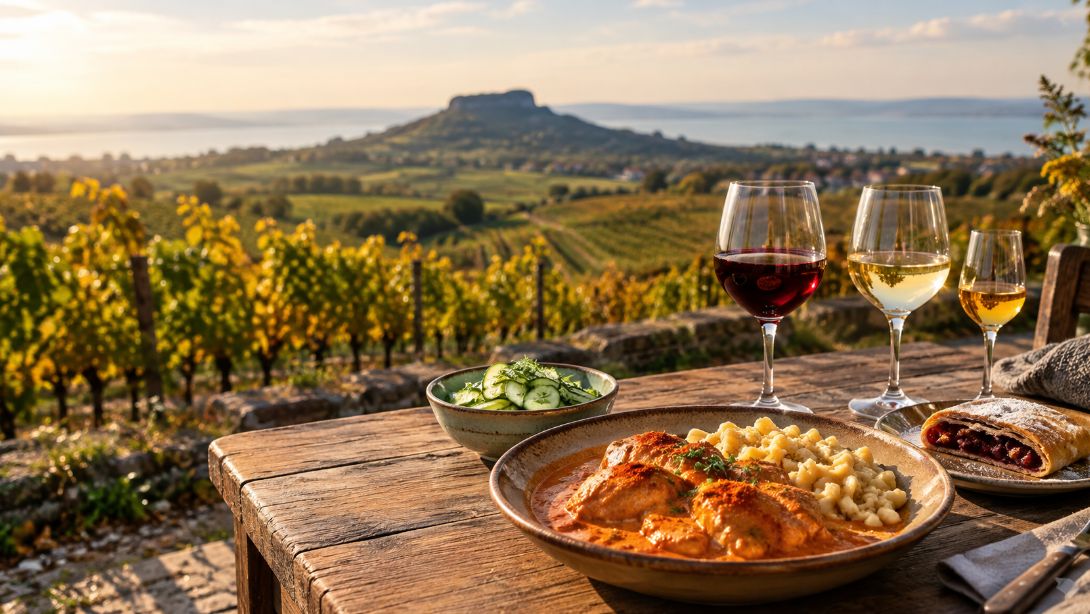
Chicken paprikash, or csirkepaprikás, is an excellent starting point. A good version combines tender chicken, a balanced sauce, and an accompaniment that does more than fill the plate.
These categories overlap in domestic cooking, but knowing the basic distinction makes ordering much easier.
Hungarian Comfort Dishes Worth Seeking Out
Chicken Paprikash with Nokedli
For an accessible introduction, start here.
Nokedli are small, irregular dumplings that resemble the broader Central European family of egg dumplings. They absorb the sauce while keeping the meal comforting rather than elaborate.
A cucumber salad can provide a refreshing contrast. Ask whether it comes with sour cream if you prefer a sharper version.
Töltött Káposzta: Stuffed Cabbage
Töltött káposzta commonly combines cabbage leaves with a meat-and-rice filling, often cooked alongside sauerkraut and sometimes smoked meat.
Recipes differ considerably. Some are gentler, others distinctly smoky or sour.
This is a dish for a leisurely meal, particularly in cooler weather. It also illustrates why “authentic” does not mean identical: families can have strong opinions about the filling, seasoning, and accompaniments.
Főzelék: Everyday Vegetable Comfort
Főzelék deserves more attention from foreign visitors.
It sits somewhere outside the usual English categories of soup, vegetable side dish, and stew. A főzelék often centres on one vegetable—peas, lentils, potatoes, squash, spinach, or beans—in a thickened preparation.
It may arrive with a fried egg, meat patty, sausage, or another topping.
Do not assume it is vegetarian. Stock, fat, thickening ingredients, and toppings vary. Nevertheless, it is a useful route into ordinary Hungarian weekday eating.
Rakott Krumpli: Layered Potatoes
Rakott krumpli typically layers potatoes, eggs, sausage, and sour cream before baking.
It is less interested in elegance than in the appeal of browned edges and familiar ingredients. Think family lunch rather than tasting menu.
Versions without sausage exist, but ask rather than assuming a vegetable-based title means a meat-free dish.
Túrós Csusza: Curd-Cheese Noodles
Túrós csusza combines pasta with túró, a fresh curd cheese, and usually sour cream. A savoury version commonly includes crisp bacon.
The result may surprise visitors who associate cheese pasta with melted cheddar or Parmesan. Túró contributes a different texture and gentle tang.
It also introduces an ingredient that appears throughout Hungarian cooking, including desserts.
Lecsó: Peppers, Tomatoes, and Variation
Lecsó is a preparation of peppers, tomatoes, and onions, with variations that include eggs, sausage, rice, or other additions.
It can be a modest meal or part of something more substantial.
Summer and early autumn are particularly rewarding times to look for vegetable-led dishes, when a menu can reveal more variety than the standard paprika-and-meat stereotype suggests.
Lángos: A Snack, Not the Entire Cuisine
Lángos is deep-fried dough, often served with garlic, sour cream, and grated cheese.
It is enjoyable market or lakeside food, but it is not a shortcut to understanding Hungarian cooking. Choose a freshly prepared version and resist assuming that the longest topping list means the best result.
Leave Room for Hungarian Desserts
Hungarian comfort food often finishes with pastry, pancakes, or something based on túró.
Useful names include:
-
Palacsinta: thin pancakes with various fillings.
-
Rétes: strudel, often filled with apple, sour cherry, curd cheese, or poppy seed.
-
Túrógombóc: curd-cheese dumplings, commonly served with sweet accompaniments.
-
Somlói galuska: a layered sponge-based dessert with sauce and cream.
-
Mákos guba: a poppy-seed bread-based sweet dish.
Poppy seed is particularly worth trying if it is unfamiliar to you. It appears as a substantial filling or coating, not merely a decorative sprinkle.
Sharing dessert is a sensible strategy after a generous main course.
How to Find Good Hungarian Food Without Chasing “Hidden Gems”
A restaurant does not become authentic simply because it lacks an English menu.
Equally, a central location or international clientele does not automatically make somewhere a tourist trap.
Look for:
-
Clear prices and portion descriptions.
-
A manageable menu.
-
Seasonal dishes.
-
Specific information about ingredients.
-
Recent reviews discussing food rather than only décor.
-
Staff willing to explain unfamiliar dishes.
For longer stays, investigate weekday lunch menus. A napi menü can introduce everyday combinations at a more accessible price than repeated evening restaurant meals.
At markets, distinguish produce stalls, prepared-food counters, and souvenir-focused businesses. They serve different purposes.
Check whether side dishes cost extra and whether service is included before adding a tip. There is no need to import American tipping expectations unchanged.
A Beginner’s Guide to Hungarian Wine
You do not need extensive wine knowledge to enjoy Hungary. Three distinctions are enough to begin.
First, a place name and a grape name are not the same thing. Tokaj is a region; Furmint is a grape.
Second, a famous regional wine may be a blend. Egri Bikavér is not a single grape variety.
Third, Hungarian wine spans dry, sweet, still, and sparkling styles. Do not infer sweetness from the country or region alone.
Useful label terms include:
| Hungarian term | Meaning |
|---|---|
| Száraz | Dry |
| Félszáraz | Semi-dry |
| Félédes | Semi-sweet |
| Édes | Sweet |
| Fehérbor | White wine |
| Vörösbor | Red wine |
| Pezsgő | Sparkling wine |
When ordering, describe what you enjoy: fresh acidity, lighter reds, fuller whites, or sweetness. That is more useful than pretending to recognise every name.
Eger: Red Blends, White Discoveries, and Cellar Culture
Eger, northeast of Budapest, is an appealing first wine destination because the town and surrounding vineyards offer variety without requiring a single-minded wine expedition.
You can combine historic streets, a relaxed meal, and a tasting.
What to Drink in Eger
Egri Bikavér is the best-known regional wine.
Often translated as “Bull’s Blood,” it is a regulated red blend based around Kékfrankos. The nickname can suggest something rough or aggressively powerful, but better examples offer balance, spice, freshness, and complexity.
Do not judge the entire category by an inexpensive export bottle remembered from decades ago.
Also seek Egri Csillag, Eger’s white blend. Depending on its category and producer, it can range from fresh and floral to more substantial and textured.
Tasting both provides a better introduction than focusing exclusively on reds.
Where to Begin
The Valley of the Beautiful Woman, or Szépasszony-völgy, is a familiar cellar destination near Eger.
It provides a convenient introduction, but it is not the entire region. Consider a booked winery visit as well, particularly if you want a quieter conversation about vineyards and production.
Confirm English-language availability and tasting arrangements in advance.
What to Eat with Eger Wines
Try a medium-bodied Bikavér with beef pörkölt, roast meat, or a mushroom dish.
For chicken paprikash, either a fresh white or a restrained red can work. The sauce, seasoning, and wine style matter more than a rigid rule.
These are suggestions, not official pairings. Choose a smaller pour if you want to compare.
Tokaj: Much More Than Sweet Wine
Tokaj rewards visitors who arrive ready to abandon the idea that Hungarian wine means dessert wine.
The region is famous for Tokaji Aszú, but dry wines deserve equal attention.
Start with Dry Furmint
Furmint can produce wines with lively acidity, orchard-fruit character, and considerable texture. Styles vary with the vineyard, vintage, and winemaking.
Hárslevelű offers another important regional perspective and can bring floral and fruit character.
Ask to compare two styles rather than ordering solely by the most familiar name.
Understand Tokaji Aszú
Tokaji Aszú is made using selected berries affected by noble rot, which concentrates flavours and sugars under suitable conditions.
Its appeal is not sweetness alone. Acidity helps balance the richness, while flavours can suggest dried apricot, citrus peel, honey, and nuts.
A small tasting pour can be more illuminating than treating it as an afterthought at the end of a long evening.
Sweet wines are not interchangeable. Ask which style is being poured and why it differs from the others.
Plan Beyond Tokaj Town
Tokaj town is a useful base, but the wider wine region includes places such as Mád and Tarcal.
For a short stay, choose a small number of booked visits. Rural distances and appointment schedules make spontaneous cellar-hopping less reliable than it might appear on a map.
Two nights allow more breathing room than a rushed return journey from Budapest.
Food Pairing in Tokaj
Try dry Furmint with fish, roast poultry, or a creamy dish, according to the wine’s weight.
With Aszú, consider a modestly sweet dessert or cheese pairing recommended by the host. A dessert much sweeter than the wine can make the wine seem sharper than intended.
Balaton: Choose a Shore, Then Explore
“Balaton wine” covers a diverse area, not one uniform style.
The broader Balaton wine region includes six districts: Badacsony, Balatonboglár, Balaton Uplands, Balatonfüred–Csopak, Somló, and Zala. Somló and Zala also demonstrate why the regional term extends beyond vineyards directly overlooking the lake.
For a first visit, choose one base rather than attempting every district.
Balatonfüred–Csopak: A Good Introduction
This northern-shore area suits travellers who want lakeside time alongside tastings.
Olaszrizling is a central grape. Despite its name, it is not the same variety as Riesling. It is also known internationally as Welschriesling.
It can produce refreshing everyday wines and more textured, serious examples. Comparing them is an enjoyable way to understand the region.
Badacsony: Volcanic Hills and Distinctive Whites
Badacsony offers a striking combination of vineyards, volcanic landforms, and lake views.
Look for:
-
Olaszrizling.
-
Szürkebarát, the Hungarian name for Pinot Gris.
-
Kéknyelű, particularly associated with Badacsony.
Kéknyelű is a rewarding choice for visitors seeking something less familiar internationally.
“Mineral” is a tasting description, not evidence that wine literally tastes of dissolved volcanic rock. Enjoy the landscape without reducing every flavour to geology.
What to Eat Around Balaton
Lakeside food ranges from simple snacks to ambitious cooking.
Look for fish dishes, seasonal vegetables, and local interpretations of Hungarian classics. Ask about the fish species and preparation instead of assuming that every lakeside restaurant serves locally caught fish.
A dry white with a fish lunch is a natural starting point. Lángos belongs to the lakeside experience too, although it need not accompany every tasting.
Planning a Food-and-Wine Trip from Budapest
Do not attempt Eger, Tokaj, and Balaton as hurried consecutive day trips.
A more satisfying structure is:
-
Budapest for menu exploration and introductory wine tastings.
-
Eger for town life and red-and-white blends.
-
Tokaj for a focused two-night wine visit.
-
One Balaton base for lake time and regional whites.
If you have only a week, choose one or two regions.
Budapest wine bars can help you compare the regions before travelling. Tell the server that you want to understand differences rather than simply order prestigious bottles.
Check current train timetables, reservations, and onward transport. A station in the right town does not guarantee easy access to a hillside winery.
Practical Advice for Tastings and Dietary Needs
Hungary has zero tolerance for alcohol when driving. Arrange a designated driver, booked transport, or suitable accommodation.
Book tastings where possible and confirm:
-
Language.
-
Duration.
-
Number of wines.
-
Food availability.
-
Price and cancellation terms.
-
Whether transport is included.
Spitting wine is acceptable at a tasting. You do not need to finish every sample.
For dietary requirements, ask specific questions. Vegetable dishes may contain animal fat or stock, while sauces and dumplings may contain dairy, eggs, or wheat.
Useful phrases include:
-
“Hús nélkül” — without meat.
-
“Tej nélkül” — without milk.
-
“Gluténmentes” — gluten-free.
These phrases are starting points, not guarantees. Explain allergies clearly and confirm preparation methods.
The Best Discovery Is Often the Least Famous Dish
Hungary becomes more rewarding when you stop treating its cuisine as one soup and its wine as one sweet bottle.
Try főzelék at lunch. Compare pörkölt with paprikás. Order a dry Tokaj wine before Aszú. Give Egri Csillag the same attention as Bikavér. At Balaton, discover why Olaszrizling means different things in different hands.
You do not need to become an expert. You need enough understanding to ask useful questions and enough time to enjoy the answers.
Frequently Asked Questions
What Hungarian dishes should I try besides goulash?
Start with chicken paprikash, stuffed cabbage, layered potatoes, and túrós csusza, a pasta dish with fresh curd cheese. For everyday vegetable cooking, try főzelék. These dishes offer a broader introduction to Hungarian food than ordering goulash at every meal.
What is the difference between gulyás, pörkölt, and paprikás?
Gulyás is generally a substantial soup with meat, potatoes, and paprika. Pörkölt is a richer stew with a more concentrated sauce. Paprikás typically has a creamier sauce finished with sour cream, with chicken paprikash being a familiar example. Recipes vary, but these distinctions help when reading a menu.
Is Hungarian food always spicy?
No. Many Hungarian dishes use sweet paprika for flavour and colour rather than intense heat. Hot paprika, fresh chillies, or pepper paste may be added separately. If you prefer mild food, ask whether the dish itself is spicy and whether hot condiments can be served on the side.
Can vegetarians enjoy traditional Hungarian food?
Yes, but checking ingredients is important. Vegetable főzelék, mushroom dishes, meat-free lecsó, and some cheese-based dishes can provide options. However, preparations may contain meat stock, animal fat, sausage, or bacon. Explain your requirements rather than assuming that a vegetable-based name means the dish is vegetarian.
Which wines should I try in Eger?
Try Egri Bikavér, a red blend based around Kékfrankos, and Egri Csillag, the region’s white blend. Bikavér is often called “Bull’s Blood,” but the name does not mean every bottle is heavy or aggressive. Comparing the two blends gives a more balanced introduction to Eger’s wines.
Is Tokaj wine always sweet?
No. Tokaj is famous for Tokaji Aszú, but it also produces dry wines, particularly from Furmint and Hárslevelű. Start with a dry white before tasting a sweet style to appreciate the region’s range. Look for “száraz” on a label if you want a dry wine.
What makes Tokaji Aszú special?
Tokaji Aszú uses selected grapes affected by noble rot, which concentrates sugars and flavours under suitable conditions. Its appeal comes from the balance between sweetness and acidity, not sweetness alone. Depending on the wine, you may notice flavours associated with dried fruit, honey, citrus peel, and nuts.
Which wines should I look for around Lake Balaton?
Olaszrizling is a useful starting point, especially around Balatonfüred–Csopak. In Badacsony, also look for Szürkebarát, the Hungarian name for Pinot Gris, and Kéknyelű, a variety closely associated with the district. Olaszrizling is also known as Welschriesling and is not the same grape as Riesling.
Can I visit Eger, Tokaj, and Balaton from Budapest?
Yes, but give each destination enough time. Eger can work as a focused excursion or overnight stay. Tokaj and Balaton are more rewarding when you allow time for winery appointments and local transport. Check current timetables and remember that arriving at a railway station does not necessarily put you close to a vineyard.
Can I drive after a wine tasting in Hungary?
Hungary has zero tolerance for alcohol when driving. Arrange a designated driver, booked transfer, or overnight accommodation before your tasting. Do not assume that one small glass is legally acceptable or that eating afterwards makes driving permissible.
Sources
The culinary distinctions, wine-region information, and driving precautions draw on the specialist and regional sources below.
- Hungary Unlocked — Gulyás, Pörkölt and Paprikás Explained
- My Hungarian Kitchen — Főzelék and Hungarian Vegetable Cooking
- Magyar Bor — Beginner’s Guide to Hungarian Wine
- Eger Wine Region — Regional Wines and Visitor Information
- Magyar Bor — Balaton Wine Region and Its Six Districts
- Badacsony Tourism — Regional Grape Varieties and Wine Styles
- Taste Hungary — Guide to the Badacsony Wine Region
- European Transport Safety Council — Hungary’s Drink-Driving Rules