In a Nutshell
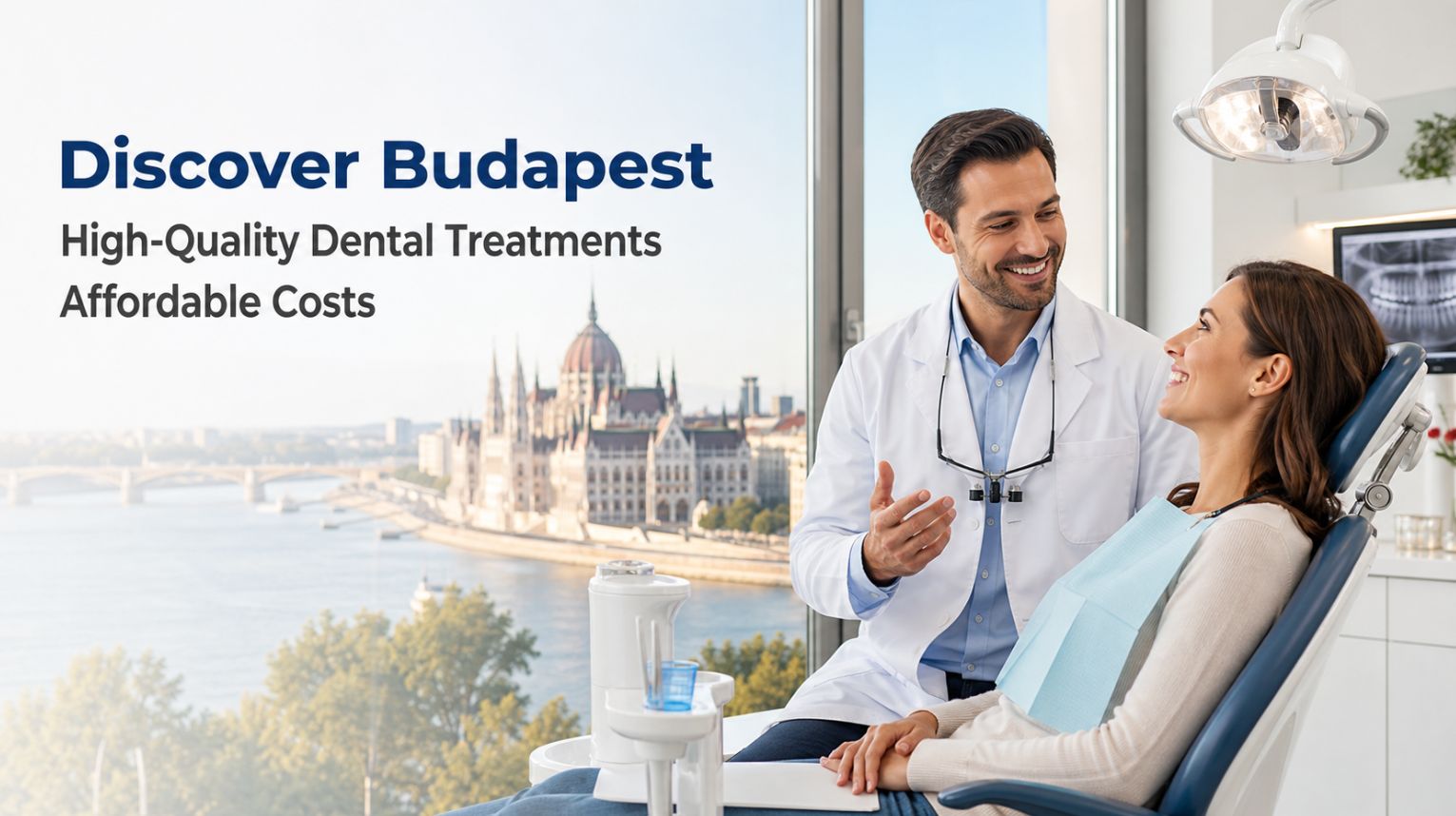
- Budapest, Hungary is one of Europe’s best-established dental tourism destinations for UK and US patients.
- Patients can access specialist-led care for dental implants, crowns, bridges, veneers, full-mouth restorations and cosmetic dentistry.
- Treatment is often more affordable than equivalent private care in the UK or United States, particularly for complex restorative work.
- Many Budapest clinics have English-speaking teams, international patient coordinators, in-house diagnostics and experience treating overseas visitors.
- Hungary’s EU location can provide additional reassurance for patients looking for an established European treatment destination.
- UK patients benefit from frequent, relatively short flights to Budapest and a practical two-visit model for implant treatment.
- US patients have improved seasonal access through American Airlines’ direct Philadelphia–Budapest service.
- Croatia is a credible EU-based alternative, especially for patients combining dentistry with an Adriatic holiday.
- Albania is a developing, lower-cost option, but patients should carefully verify clinic licences, clinician credentials, materials and aftercare.
- Turkey can be affordable, but aggressive package marketing and inconsistent standards mean patients should use extra caution.
- The best dental tourism outcome depends on choosing a clinic for clinical quality and transparency – not simply the lowest price.
- Always request an itemised treatment plan, named clinicians, material and implant-brand details, written guarantees, medical records and a clear aftercare process.
Dental Tourism in Europe: Why Budapest, Hungary Is a Leading Choice for UK and US Patients
European dental tourism has become a mainstream option for patients seeking high-quality dentistry without the cost pressures often associated with private treatment in the UK and United States. From single implants and crowns to full-mouth reconstruction, cosmetic dentistry and complex restorative cases, patients increasingly compare treatment abroad with local private options.
Among Europe’s established dental tourism destinations, Budapest, Hungary remains one of the most credible and experienced choices. It combines a long history of treating international dental patients, EU-based clinical regulation, specialist-led clinics, competitive treatment costs and straightforward travel connections from the UK. In 2026, the return of a direct American Airlines service between Philadelphia and Budapest also makes the city more accessible to US patients during the summer season.
This does not mean every clinic in Budapest is automatically right for every patient. Dental tourism should never be treated as a bargain-hunting exercise alone. The best outcome depends on selecting the right clinician, receiving a transparent treatment plan, understanding the materials being used and having a realistic aftercare plan once you return home.
Europe’s Dental Tourism Landscape
Dental tourism is the practice of travelling abroad for planned dental treatment. Patients may travel for a single procedure, such as a crown or implant, or for a more comprehensive programme involving several teeth, full-arch implant restoration, veneers, bridges or periodontal treatment.
The appeal is clear. Private dental treatment costs can be substantial in the UK and particularly in the US, where insurance coverage may be limited, annual caps can be restrictive and complex restorative work can require significant out-of-pocket spending. By travelling to an established European dental centre, some patients can access a broader treatment plan at a lower overall cost, even after flights, accommodation and local transport are included.
However, the European dental tourism market is not one uniform category. It includes:
- Established destinations with long experience of international patients, such as Hungary.
- Mature but smaller alternatives, including Croatia.
- Rapidly developing markets, including Albania.
- High-volume destinations outside the EU, notably Turkey.
- Premium Western European destinations, where treatment may be excellent but savings are often less pronounced.
For UK and US patients, the important question is not simply, “Where is the cheapest dentist abroad?” A better question is: “Where can I obtain clinically appropriate treatment, with clear documentation, qualified professionals, reliable materials and realistic continuity of care?”
That distinction matters because a low initial quote can omit critical costs: diagnostic imaging, bone grafting, temporary teeth, sinus lifts, final ceramic restorations, sedation, revisions or additional visits. A responsible clinic should be comfortable explaining what is and is not included before you book.
Why Budapest Is a Dental Tourism Leader
Budapest has been associated with international dentistry for decades. Hungary’s central European location, strong dental education tradition, relatively efficient cost base and proximity to Western Europe helped make it a preferred destination for patients from the UK, Ireland, Germany, Austria, Switzerland, Scandinavia and beyond.
Today, Budapest is particularly well known for:
- Dental implants and implant-supported bridges.
- All-on-4 and full-arch rehabilitation.
- Crowns, bridges and advanced prosthodontics.
- Cosmetic dentistry and smile makeovers.
- Oral surgery and complex restorative cases.
- Treatment plans requiring in-house diagnostics and dental laboratories.
The city’s strength is not merely that treatment can cost less than in London, Manchester, New York or Los Angeles. Its real advantage is the concentration of clinics that have built their systems around overseas patients. Many established Budapest dental clinics offer English-speaking dentists, treatment coordinators, written estimates, airport-transfer support, partner accommodation and staged treatment schedules designed around international travel.
For patients considering substantial treatment, this experience can be more valuable than a headline discount. A complex implant case involves far more than placing an implant. It requires diagnostics, treatment sequencing, surgical planning, implant-system selection, bite assessment, healing time, final prosthetic design and long-term maintenance.
An EU-Based Treatment Environment
Hungary is a European Union member state. For EU and EEA residents, planned care in another EU or EEA country sits within the broader framework of cross-border healthcare rights, although reimbursement rules vary by home country and treatment type. The European Commission advises patients to contact their national contact point before travelling, as coverage and administrative requirements are specific to the patient’s country of residence.
For UK patients, Brexit changed the reimbursement position. Routine private dental tourism in Hungary should generally be viewed as self-funded, rather than as an NHS reimbursement route. That does not make Budapest a poor choice; it simply means patients should budget on the basis that they will pay privately and should not rely on an assumed NHS contribution.
For US patients, Hungary’s EU status does not create an insurance reimbursement entitlement. Nevertheless, EU-based clinical and consumer frameworks may be an appealing part of the overall due-diligence picture. Patients should still confirm exactly who is providing care, how professional registration can be verified and what process applies if there is a complaint or treatment complication.
Quality Dentistry at More Accessible Prices
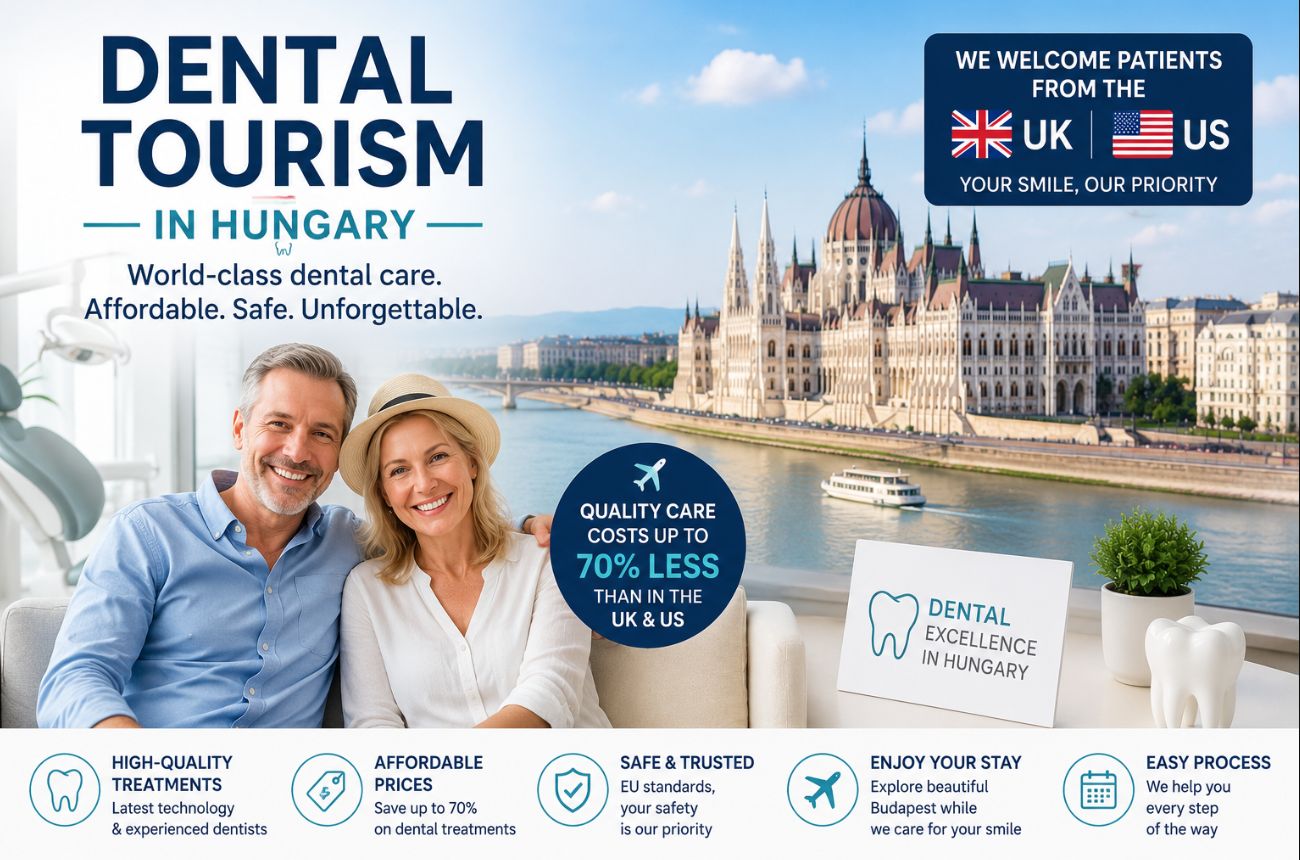
The cost advantage of dental treatment in Hungary is often meaningful, especially for major restorative work. Labour, operational costs and laboratory expenses are generally lower than in major UK and US cities. This can make the total price of implants, crowns and full-mouth restorations more accessible.
Yet affordability should never be confused with “cheap dentistry.” Good dental treatment uses suitable materials, correct planning, robust infection-control systems, precise laboratory work and professional accountability. Those factors carry costs in every country.
A sensible comparison is therefore not the cheapest advertised implant price. Compare the total clinical package.
Ask every clinic whether its quotation includes:
- A clinical examination and full diagnostic assessment.
- Panoramic X-ray or CBCT scan where clinically required.
- The implant brand and model.
- The surgical placement fee.
- Healing caps, abutments and final crown or bridgework.
- Bone grafting, sinus lift or extraction costs if required.
- Temporary teeth where relevant.
- Laboratory fees.
- Sedation or anaesthesia, if applicable.
- Medication and post-operative reviews.
- The guarantee terms for the implant, restoration and laboratory work.
- A copy of records, radiographs and implant details for your dentist at home.
The price difference between a basic implant quote and a complete implant restoration can be substantial. A patient who compares only the first number may find that the final invoice is not comparable at all.
For example, an implant treatment plan may appear affordable because it covers surgical implant placement only. But a complete tooth replacement typically also requires an abutment and a final crown. Depending on the case, it may require extraction, grafting, imaging, temporary restoration and follow-up visits. Transparency matters more than a low advertised starting price.
Specialist Clinics and Modern Treatment Planning
Budapest’s more established clinics commonly work with multi-disciplinary teams. This matters when treatment is complex. A patient who needs a full-mouth restoration may benefit from input from an oral surgeon, implantologist, prosthodontist, restorative dentist, hygienist and dental technician rather than relying on one person to manage every stage.
Many international clinics in Budapest use digital diagnostics, including CBCT imaging, intraoral scanning, digital smile design and computer-assisted implant planning. These tools do not guarantee a successful result on their own, but they can support more accurate diagnosis, communication and treatment planning when used properly by experienced clinicians.
Patients should look for evidence that a clinic’s recommendations are based on their individual oral condition rather than a pre-set package. A good clinic may advise against immediate implants, veneers or full-arch treatment if the patient’s bone, gum health, bite, decay or medical history makes another route safer.
That is a positive sign, not a sales failure.
Before committing, ask for:
- The full name and qualifications of the dentist or surgeon carrying out each stage.
- Confirmation of who performs the surgery and who makes the final restorations.
- The exact implant system and restoration materials proposed.
- A written treatment plan, including alternatives and known risks.
- The number of visits required and expected healing periods.
- The guarantee and aftercare policy in writing.
- Copies of scans, radiographs, invoices and implant documentation after treatment.
For implant patients, obtaining an implant passport or written record is particularly useful. It should identify the implant manufacturer, product line, dimensions and placement details so a dentist at home can identify components if future maintenance is required.
Travel Advantages for UK Patients
Budapest is one of the more convenient overseas dental destinations for British patients. London and several regional UK airports have regular flight options to Budapest, making a consultation or short treatment trip relatively practical. The city is also compact, easy to navigate and offers a wide range of accommodation, from budget hotels to higher-end serviced apartments.
For many UK patients, the practical model is:
- An initial remote consultation and review of recent X-rays.
- A first visit for examination, imaging, hygiene, surgery or preparation work.
- A healing period at home, where required.
- A second visit for final crowns, bridges or permanent implant restorations.
Not all procedures require two trips. Some crowns, smaller bridge cases and selected cosmetic treatments can be completed within a shorter stay. Implant treatment, however, often needs a healing period before the final restoration is fitted. Any provider claiming that every complex implant case can be safely completed in a few days should be questioned carefully.
Budapest also offers a helpful recovery environment. Patients can combine downtime with a relaxed city break, although sightseeing should never take priority over post-operative instructions. After oral surgery, patients should allow for rest, avoid strenuous activity when advised and stay close enough to the clinic for scheduled checks.
New US Flight Connectivity
For American patients, getting to Budapest traditionally involved one or more connections through cities such as London, Frankfurt, Amsterdam, Paris or Vienna. Those routes remain useful, particularly outside the summer travel period.
However, Budapest’s transatlantic accessibility has improved. American Airlines resumed a seasonal daily non-stop service between Philadelphia and Budapest from 21 May 2026, operating through 5 October 2026 with a Boeing 787-8 Dreamliner. Philadelphia is a major American Airlines hub, giving patients from many US cities access to onward domestic connections on one itinerary.
For US dental tourists, this can simplify travel planning, particularly for patients who want to minimise airport transfers after treatment. The route is seasonal, so patients should check current schedules before basing their treatment dates around it. It also remains wise to schedule a buffer of several days before flying home after significant oral surgery, depending on clinical advice.
The direct route should be seen as a convenience advantage rather than a reason to rush into treatment. A patient’s clinical plan, recovery time and aftercare arrangements should always come first.
Turkey: Lower Prices, Higher Due-Diligence Needs
Turkey remains a prominent dental tourism destination, especially for patients attracted by highly marketed packages for veneers, crowns and full-mouth cosmetic treatment. It can offer skilled clinicians and reputable hospitals, but the market is extremely variable. Patients should avoid treating “Turkey” as a single clinical standard.
The primary concern is not nationality or location. It is the risk of choosing a clinic based on aggressive social-media marketing, package pricing or promises of very fast transformations. In the most concerning cases, patients may receive extensive irreversible tooth reduction for crowns or veneers without adequate discussion of conservative alternatives, gum health, bite function or long-term maintenance.
The UK Foreign, Commonwealth & Development Office advises people considering medical, surgical or dental procedures overseas to consult a UK clinician first, conduct independent research and avoid relying solely on promotional material from providers with a commercial interest in securing treatment. It also notes that quality can vary considerably between facilities and locations.
This is particularly relevant to high-volume “Turkey teeth” marketing. A smile makeover can be appropriate when carefully planned, but healthy teeth should not be aggressively prepared simply to create a quick cosmetic result. Patients should ask whether whitening, orthodontics, bonding, minimal-prep veneers or selective restorations could preserve more natural tooth structure.
Turkey is outside the EU cross-border healthcare framework. That does not automatically make it unsafe, but it means UK and EU patients should be especially rigorous about verifying the clinic, clinician, facility licence, materials, insurance arrangements and pathway for complications. A low price is not adequate evidence of quality.
Budapest is often a more measured alternative for patients who want affordable treatment but prefer an EU destination with a longer-established reputation for dental tourism. Still, Hungary should also be researched clinic by clinic; no destination removes the need for patient due diligence.
Croatia and Albania as Alternatives
Croatia is an increasingly visible dental tourism option. As an EU member state, it can appeal to patients who want treatment within the EU while combining dental visits with the Adriatic coast, Zagreb or other city destinations. Croatian clinics may be particularly attractive for European patients seeking crowns, implants and cosmetic dentistry with a holiday component.
Its relative drawback compared with Budapest is depth of specialisation and scale. Hungary, and Budapest in particular, has a very large and long-established international dental patient infrastructure. Croatia can be an excellent option, but patients should compare clinician experience, treatment scope, access from their home airport and total costs rather than choosing solely on destination appeal. EU cross-border healthcare principles apply to eligible EU and EEA residents, subject to their home-system requirements.
Albania is another developing dental tourism destination, centred largely on Tirana. It has gained attention for competitive prices, English- and Italian-speaking teams, and packages aimed at patients seeking an alternative to the cheapest offers in Turkey. Some modern Albanian clinics offer digital dentistry, CE-marked materials and international patient coordination.
However, Albania is not an EU member state, so patients should treat it as a developing market requiring more careful verification. The European Health Insurance Card does not apply there, and UK or US patients should assume private, self-funded care. A strong Albanian clinic should be able to provide the dentist’s registration details, clinic licence information, itemised treatment plan, material documentation, consent documents in English and a clear aftercare process.
For patients comparing Hungary, Croatia, Albania and Turkey, the destination is only the starting point. The decisive factor is the individual clinic’s clinical standards and accountability.
How to Choose a Budapest Dental Clinic
A dental holiday should begin with research, not a deposit. Select at least two or three clinics and compare written proposals on a like-for-like basis.
Look for:
- Named clinicians, not only a clinic brand or sales representative.
- Verifiable professional qualifications and experience.
- A comprehensive remote consultation process.
- Clear explanation of limitations of remote assessments.
- A full clinical assessment once you arrive before irreversible treatment begins.
- Detailed, itemised pricing.
- Recognised implant and restorative material brands.
- Written consent and realistic discussion of risks.
- English-language communication throughout treatment.
- A transparent guarantee policy.
- A plan for complications or maintenance after you return home.
- Independent reviews assessed critically over time, not only recent promotional testimonials.
Avoid providers that pressure you to book immediately, promise guaranteed results without an examination, recommend the same treatment to every patient or dismiss questions about materials, risks and aftercare.
A high-quality clinic will not be offended by careful questions. It will expect them.
Is Budapest Right for You?
Budapest dental tourism may be a strong option if you need significant private treatment, are comfortable travelling, can attend the required number of visits and are prepared to research clinics thoroughly. It is especially worth considering for implant dentistry, crowns, bridges, full-mouth rehabilitation and complex restorative treatment where the price difference can make a meaningful difference to the total cost.
It may be less suitable if you have an urgent dental infection, unstable medical conditions, limited ability to travel, no flexibility for follow-up trips or no local dentist willing to provide routine maintenance after you return. Patients with complex medical histories should speak to their doctor and dentist before making travel arrangements.
The most successful dental tourism outcomes are not driven by the lowest quote. They come from careful planning, evidence-based dentistry, transparent communication, adequate recovery time and an ongoing commitment to oral hygiene and maintenance.
For UK and US patients seeking affordable, specialist-led dental treatment in Europe, Budapest remains one of the most compelling destinations. Its combination of experience, specialist clinic infrastructure, international patient support, EU location and improved US air access gives it a credibility that newer dental tourism markets are still working to establish.
FAQs: Dental Tourism in Budapest
Is Budapest a good destination for dental treatment?
Budapest is one of Europe’s most established dental tourism destinations, with many clinics experienced in treating UK, Irish, European and international patients. It is particularly popular for dental implants, crowns, bridges, veneers and full-mouth restorative treatment.
How much can I save on dental treatment in Hungary?
Savings depend on the treatment, clinic, materials and complexity of your case. Patients often find that private treatment in Budapest costs less than comparable care in the UK or US, especially for multi-tooth restoration and implant treatment. Always compare itemised total quotes, rather than an advertised “from” price.
Are dentists in Budapest qualified?
Hungary has qualified dental professionals and many clinics have teams specialising in implant dentistry, oral surgery, prosthodontics and cosmetic dentistry. Before booking, ask for the treating dentist’s full name, qualifications, professional registration details and relevant experience with your planned procedure.
Is dental treatment in Hungary safe?
Dental treatment abroad can be safe when the clinic is properly vetted and the treatment is clinically appropriate. Choose a clinic that provides a full examination, diagnostic imaging where necessary, informed consent, named clinicians, clear material details, written pricing and an aftercare plan. Avoid providers that pressure you to book or promise identical treatment packages to every patient.
How many visits will I need?
It depends on the procedure. Crowns, veneers and smaller restorative cases may sometimes be completed in one visit, subject to clinical assessment. Dental implant treatment commonly requires at least two visits: one for implant placement and another after a healing period for the final crown, bridge or full-arch restoration.
What should a Budapest dental quote include?
A complete quote should state whether it includes consultation, X-rays or CBCT scans, extractions, implant surgery, implant brand, abutments, crowns or bridges, temporary restorations, bone grafting, laboratory fees, medication, review appointments and guarantees. Ask which services may create additional costs.
Can I fly home after dental implant surgery?
Many patients can fly after treatment, but the right timing depends on the procedure, your health and your dentist’s clinical advice. Do not schedule a return flight too tightly after surgery. Leave sufficient time for a post-operative check and seek urgent advice if you develop significant pain, bleeding, fever or swelling.
Can UK patients get NHS funding for dental work in Hungary?
Most dental tourism is privately funded. You should not assume NHS funding or reimbursement will be available for planned treatment abroad. Confirm your financial position before booking, and budget for travel, accommodation, treatment and any future maintenance.
Will my UK dentist provide aftercare?
Do not assume that an NHS or private dentist in the UK will take responsibility for dental work completed abroad. A local dentist may offer an emergency appointment or private assessment, but may decline to adjust, replace or maintain work they did not provide. Discuss aftercare with both the overseas clinic and your home dentist before travelling.cliniccheck.co+1
What records should I request before returning home?
Ask for your treatment plan, invoices, X-rays or scans, consent documentation, materials information, guarantee terms and details of any implant system used. For implants, request an implant passport or document listing the manufacturer, model, dimensions and placement details.
Is Budapest easier to reach from the UK or the US?
Budapest has regular flight connections from the UK. For US patients, American Airlines operates a seasonal daily non-stop Philadelphia–Budapest service during the 2026 summer season; confirm the latest timetable before arranging treatment dates because the route is seasonal.aa+1
Is Hungary a safer alternative to Turkey for dental tourism?
It is more accurate to compare individual clinics than to label an entire country safe or unsafe. Hungary offers an established, EU-based dental tourism market and a long record of treating international patients. Turkey can also have reputable clinics, but patients should be especially cautious about high-pressure marketing, ultra-low package prices and irreversible cosmetic treatment proposed without a thorough assessment.
Are Croatia and Albania good alternatives to Budapest?
Croatia is an EU-based option with growing dental tourism services and may appeal to patients combining treatment with an Adriatic holiday. Albania is an emerging lower-cost destination, especially for implants and cosmetic work, but patients should undertake particularly thorough checks of clinic licensing, clinician credentials, materials, hygiene protocols and aftercare arrangements.
How do I choose the right dental clinic in Budapest?
Shortlist at least two or three clinics, send recent X-rays where available and request comparable written treatment plans. Choose based on clinician credentials, diagnostic process, material transparency, the total treatment cost, independent patient feedback and the clinic’s plan for long-term support—not on the lowest headline price alone.
Sources
- Routes Online: American Airlines Budapest–Philadelphia service
- European Commission: Accessing treatment abroad
- EU Healthcare: Country-specific healthcare information for Hungary
- Clinic Check: Hungary and dental treatment abroad for UK patients
- Clinic Check: Turkey, medical tourism and safety considerations
- Hygeia Dent: Dental tourism in Albania
- UK travel guidance coverage: FCDO advice for medical tourists in Turkey