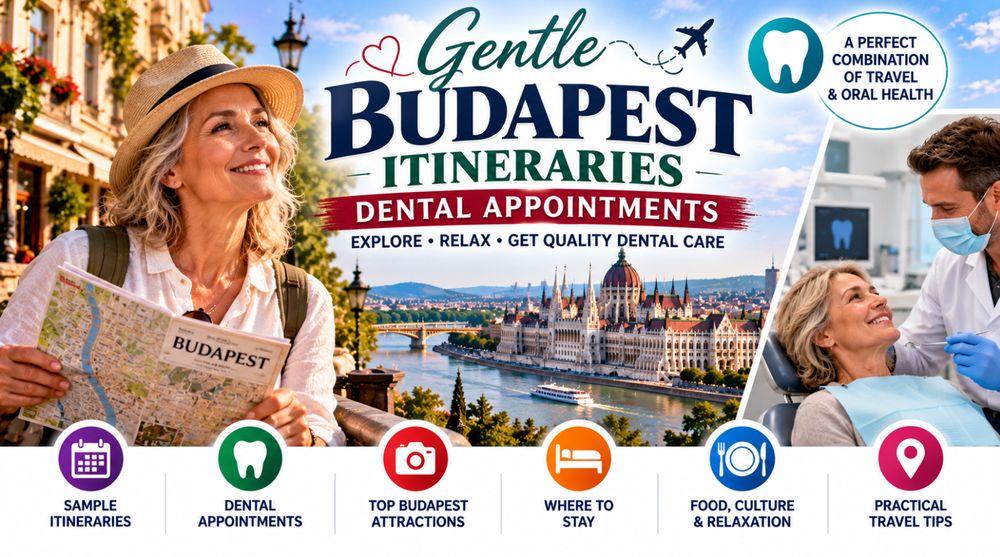
Key Takeaways
- Gentle Budapest itineraries let you enjoy the city between dental appointments without packing your schedule.
- Match activities to your treatment. A free afternoon after a consultation is different from the hours after an extraction or implant surgery.
- Keep the immediate post-surgery period clear for rest and follow your clinic’s instructions, including escort requirements after sedation.
- Short Danube cruises can offer seated sightseeing, but check boarding steps, indoor seating, toilets, and cancellation terms before booking.
- Enjoy café culture without food pressure. Choose drinks and food that meet your dentist’s temperature and texture guidance.
- Explore Margaret Island, City Park, or the riverside in small sections rather than attempting long walks or full-day tours.
- Thermal baths are not a dental recovery treatment. After surgery, wait for explicit clearance before using pools, saunas, or steam rooms.
- Gellért Baths are closed in 2026. Check current opening and accessibility information before choosing another bath.
- Plan one manageable outing at a time, keep transport simple, and leave an easy route back to your accommodation.
- Cancel sightseeing and contact your clinic if symptoms worsen. Your recovery matters more than any prepaid ticket.
Budapest Between Dental Appointments: Relaxed Itineraries and Practical Tips for Dental Tourism Stays
Budapest is a rewarding city to explore slowly. You can admire the Parliament from a comfortable boat seat, spend an unhurried hour in a historic café, or enjoy a short riverside stroll without turning the day into an endurance test.
For visitors travelling from the United States or United Kingdom for dental treatment, that slower approach makes sense. Your appointments come first. Everything else should fit around your comfort, energy, and dentist’s instructions.
There is one important distinction: a free afternoon after a consultation is not the same as a free afternoon after implant surgery. Thermal bathing, a long walk, or even a leisurely meal may be appropriate at one stage and unsuitable at another.
The best Budapest dental itinerary therefore starts with flexibility. Choose one manageable activity, keep an easy route back to your accommodation, and leave room to cancel.
This guide brings together gentle sightseeing ideas, quiet Danube cruises, café stops, and realistic thermal-bath planning. It is a travel guide, not medical clearance. Your treating dentist’s advice always takes priority.
First, Match Your Plans to Your Dental Treatment
“Between appointments” can describe very different situations.
You might be waiting for a consultation, returning for a crown fitting, recovering from an extraction, or attending follow-up care after extensive surgery. Those circumstances should not share one sightseeing schedule.
After a Consultation or Non-Surgical Appointment
If you have not received sedation, feel well, and have no specific restrictions, a short outing may be straightforward.
Possible choices include:
-
A seated river cruise.
-
A nearby café.
-
A brief, level walk.
-
A small exhibition.
-
Time in a neighbourhood park.
Even routine treatment can leave you tired or uncomfortable. Keep your first plan modest.
After Extractions, Implants, or Other Oral Surgery
Do not build a sightseeing day around the hours immediately after surgery.
Oral-surgery aftercare commonly includes rest, restrictions on strenuous activity, and guidance about food, drink, smoking, and alcohol. Your instructions may differ according to the procedure and your medical circumstances.
After sedation or general anaesthesia, follow the clinic’s escort and supervision requirements. Do not plan a solo cruise or independent sightseeing excursion.
Ask before leaving the clinic:
-
What activity is suitable today?
-
When may I resume longer walks?
-
When may I use a swimming pool, thermal bath, sauna, or steam room?
-
Are there restrictions related to my medication?
-
Whom should I contact if symptoms worsen?
There is no universal “day three means sightseeing” rule.
Thermal Baths: A Budapest Highlight, Not a Recovery Treatment
Budapest’s thermal baths are famous, but a spa visit should not automatically appear in a post-surgery itinerary.
Warm water, humid rooms, slippery surfaces, changing facilities, and getting to the venue all create practical demands. Heat and exertion may also conflict with your postoperative instructions.
Thermal water is not a treatment for dental wounds, and a bath visit should never be presented as a way to accelerate implant healing.
The cautious approach is simple:
-
Consider bathing before treatment, if medically suitable.
-
After surgery, wait for explicit clearance.
-
Ask separately about pools, saunas, steam rooms, and massage.
-
Check the bath’s own health restrictions.
-
Avoid non-refundable bookings before your dentist confirms suitability.
Permission for a gentle walk does not necessarily mean permission for a hot pool.
Széchenyi Thermal Bath: Plan Carefully
Széchenyi, in City Park, is a striking choice for visitors who are medically cleared to bathe. However, it is a large attraction, not a guaranteed quiet retreat.
For a more manageable visit:
-
Check opening hours and service updates directly.
-
Ask about quieter periods.
-
Consider a private changing cabin.
-
Bring the required bathing items.
-
Avoid turning admission into an obligation to stay all day.
-
Arrange straightforward transport.
The official website states that the building is not fully barrier-free. Visitors with limited mobility should discuss access before purchasing.
Its online ticket conditions also restrict changes and refunds, which matters when treatment plans can move.
Gellért Baths Are Closed in 2026
Do not organise your dental trip around bathing at Gellért.
The official site states that Gellért Thermal Bath closed on 1 October 2025, with reopening planned for 2028. Older itineraries recommending it as an available spa stop are outdated.
If your dentist advises against bathing altogether, choose a park, café, or comfortable hotel lounge instead. You are not missing an essential part of recovery.
Itinerary 1: A Quiet Central Pest Afternoon
Best for: Visitors who feel well after a non-surgical appointment or have been cleared for a short outing.
Suggested structure: One café, one brief outdoor stop, then return.
Central Pest offers a useful combination of attractive streets, river views, and places to sit. The mistake is trying to cover the entire centre because the landmarks appear close together.
Start Near Vörösmarty Square
Make Vörösmarty tér your destination rather than the beginning of a long walking tour.
Café Gerbeaud provides a classic Budapest setting on the square. Its historic interiors can make a single stop feel like an experience in its own right.
However, an iconic café is not necessarily quiet. Visit outside peak periods where practical, ask about seating, and be prepared to choose somewhere simpler if there is a queue.
You do not need to order a large meal or work through a list of famous pastries.
Add a Short Riverside View
If comfortable, continue towards the Pest-side promenade for a brief look across the Danube.
Choose a stopping point and sit where seating is available. Do not automatically extend the outing into a bridge crossing.
The return journey is part of the activity. Finish while you still feel comfortable rather than waiting until you are tired.
Keep Food Choices Treatment-Friendly
After surgery, follow your clinic’s instructions about texture and temperature.
A cake described as “soft” may still contain nuts, seeds, brittle layers, or chewy ingredients. Coffee may arrive too hot for your current restrictions.
Café culture can mean enjoying the room and conversation with an appropriate drink. It does not have to mean eating everything Budapest is famous for.
Itinerary 2: Budapest from a Comfortable Danube Cruise
Best for: Visitors who can board safely, sit comfortably, and are well enough for the outing.
Suggested structure: Direct transport to the dock, one short cruise, direct return.
A Danube sightseeing cruise can provide a strong sense of Budapest without extensive walking. Riverside landmarks come into view while you remain seated.
Depending on the route, you may see the Parliament, Buda Castle, the Chain Bridge, and other riverfront architecture.
Several operators offer trips lasting roughly an hour. Duna Cruises, for example, advertises a one-hour sightseeing circuit beginning and ending at Dock 10 near Elizabeth Bridge.
Choose Sightseeing, Not a Party Package
For a gentle dental-trip outing, prioritise:
-
Indoor seating.
-
A manageable duration.
-
A clearly identified departure point.
-
Toilets.
-
An audio guide rather than an entertainment programme.
-
Clear boarding information.
Avoid assuming that a welcome drink must be alcoholic. Follow your dentist’s medication and alcohol guidance.
A dinner cruise can be less suitable if you have limited food choices, jaw discomfort, or a need to return quickly.
Ask About Boarding Before Booking
A seated activity is not automatically accessible.
River levels can affect gangway angles. Boats may have steps, and toilets may be on another deck. Dock access can involve uneven surfaces or a longer walk than expected.
Ask the operator:
-
Are there steps between the street and the seat?
-
Can staff explain the boarding arrangement?
-
Is a toilet available on the seating level?
-
Can I remain indoors throughout?
-
How early must I arrive?
Allow time for boarding without arriving so early that you face a long wait outside.
Daytime or Evening?
Daytime is often easier for seeing steps, reading signs, and organising transport. Evening brings illuminated buildings, but also darkness, colder air, and a later return.
Choose comfort over the most dramatic photograph.
Itinerary 3: A Small Slice of Margaret Island
Best for: Visitors cleared for light walking who want a green setting.
Suggested structure: Reach one part of the island, take a short stroll, sit, return.
Margaret Island invites ambitious plans. On a dental trip, resist them.
The island is large enough that a full circuit can become a substantial outing. You do not need to combine gardens, ruins, attractions, and every scenic path.
Choose One Area
Decide beforehand where you want to arrive and where you will stop.
Use transport that limits the distance from your arrival point to the area you intend to visit. Check current routes and vehicle access rather than assuming a taxi can stop anywhere.
A manageable visit could mean:
-
A brief walk on a comfortable path.
-
A period sitting in the shade.
-
A quiet conversation.
-
A return journey before fatigue develops.
Avoid converting a gentle outing into cycling, jogging, or an exercise session.
Prepare for Weather
Sun, wind, rain, and cold can change an easy plan quickly.
Carry water, suitable clothing, and a charged phone. In hot weather, a hotel lounge may be more sensible than a park. In winter, an indoor stop may offer the restful atmosphere you wanted without the discomfort.
Itinerary 4: City Park Without the Full-Day Marathon
Best for: A relaxed pre-treatment day or a later outing approved by your dentist.
Suggested structure: One park area plus one seated break.
City Park, or Városliget, can provide greenery, architecture, and space without demanding a packed schedule.
However, it is not a small garden. An itinerary combining Heroes’ Square, museums, the zoo, Vajdahunyad Castle, and Széchenyi can produce far more walking than intended.
Choose One Main Focus
Pick one:
-
A short park walk.
-
An exterior view of Vajdahunyad Castle.
-
A café stop near the park.
-
A medically cleared bath visit.
If your energy is limited, do not add another attraction simply because it is nearby.
Check practical access before choosing transport. A station close to the destination does not necessarily offer step-free access.
Treat the Bath as the Whole Outing
If cleared to visit Széchenyi, let that be the main event.
Changing, navigating the building, bathing, and travelling back can be enough. You do not need to add a museum and a long lunch to justify the journey.
The success of the day is returning comfortable—not maximising the ticket value.
Itinerary 5: Buda Views Without Climbing Castle Hill
Best for: Visitors wanting the Buda atmosphere with limited walking.
Suggested structure: Transport close to one destination, a short visit, return.
Castle Hill is one of Budapest’s most appealing areas, but slopes, cobblestones, steps, and crowds can make it less gentle than photographs suggest.
Do not assume it is an effortless post-treatment walk.
Remove the Climb Where Possible
If you want to visit, investigate transport close to your chosen area. Confirm drop-off arrangements and remaining walking distances.
Choose one viewpoint or one café instead of attempting the whole district.
If even that seems demanding, stay at river level. Buda’s scenery is equally enjoyable from across the water or from a cruise.
This is an important planning principle: you can appreciate a landmark without visiting every terrace and staircase around it.
The Immediate Post-Treatment Day: Stay Close
After oral surgery, the most useful itinerary may be your accommodation, a nearby food source, and the clinic’s contact number.
Choose comfort rather than entertainment.
A hotel lounge, a quiet room with daylight, or a short approved stroll can provide enough change of scene.
Prepare before the appointment:
-
Obtain recommended food and drinks.
-
Confirm transport back.
-
Arrange an escort when required.
-
Save clinic and after-hours numbers.
-
Keep medication instructions accessible.
-
Avoid fixed sightseeing reservations.
Do not schedule an attraction to fill the hours after sedation. That time belongs to recovery and supervision according to your clinical instructions.
Café Culture Without Food Pressure
Budapest’s cafés work particularly well for slower travel because the setting is part of the experience.
Choose a place for comfortable seating, an accessible toilet, and an easy journey back—not just its social-media reputation.
A neighbourhood café can be more suitable than a famous venue if it offers:
-
No queue.
-
Space between tables.
-
A quiet corner.
-
Flexible food options.
-
A nearby pickup point.
If you have limited mouth opening or soreness, a brief visit may be more enjoyable than a long conversation over lunch.
Before ordering, explain any food requirements. Do not rely on the appearance of a dish to judge whether it fits your postoperative plan.
A Flexible Three-Day Framework
This is an activity framework, not a medical recovery timetable.
Before Treatment
If medically suitable:
-
Take a short cruise.
-
Explore one neighbourhood.
-
Consider a bath visit.
-
Buy supplies for the treatment day.
Treatment Day
Keep the schedule clear.
Attend your appointment, follow discharge instructions, and return to your accommodation with any required support.
A Later Day, When Cleared
Choose one:
-
A café visit.
-
A brief promenade stroll.
-
A short park outing.
-
A seated cruise, if suitable.
Do not assume that feeling better replaces clearance for bathing, strenuous activity, or other restricted activities.
Practical Details That Make the Trip Easier
Stay Conveniently Close to Your Clinic
The best location is not always the most famous district. Consider journey time, transfers, stairs, and the possibility of extra appointments.
Ask about lifts, room access, heating, cooling, and nearby food shops.
Choose Flexible Bookings
Treatment can change after examination or during care.
Look for changeable accommodation and cancellation terms you understand. Avoid stacking prepaid attractions between appointments.
Review Travel Insurance
Check whether your policy covers planned dental treatment and related complications. Standard holiday cover should not be assumed to include them.
Keep insurance contacts and treatment records accessible.
Leave Clinical Decisions with Your Dentist
Flight timing after procedures, including sinus-related treatment, needs individual advice.
Do not use a sightseeing gap as evidence that you are fit to travel home.
When to Cancel Your Plans
Stop sightseeing and contact your clinic if symptoms concern you, particularly worsening pain, uncontrolled bleeding, increasing swelling, fever, or an unpleasant taste associated with feeling unwell.
Breathing difficulty or difficulty swallowing requires urgent medical assessment. Hungary’s emergency number is 112.
A prepaid ticket is never a reason to delay care.
The Best Budapest Itinerary Leaves Space
Budapest rewards attention more than speed. A quiet hour on the Danube can be more memorable than rushing between landmarks. One comfortable café visit can offer more pleasure than a day spent pushing through fatigue.
For dental visitors, the strongest plan is simple: put treatment first, select low-demand activities, and make returning to your accommodation easy.
Enjoy thermal baths only when medically appropriate. Choose cruises for comfortable sightseeing, not entertainment pressure. Let cafés and parks provide small moments of pleasure rather than a checklist.
Your trip does not need to become either a hospital stay or an exhausting city break. With sensible boundaries, it can be a well-organised treatment visit with time to appreciate Budapest.
Sources
The medical cautions and visitor information above draw on NHS aftercare guidance, official bath information, Budapest tourism resources, and cruise-operator details.
-
- Newcastle Hospitals NHS Foundation Trust — Aftercare Following Oral Surgery
- University Hospitals Coventry and Warwickshire — Postoperative Oral and Facial Surgery Instructions
- Oxford Health NHS Foundation Trust — Mouth Care After Surgery
- Széchenyi Thermal Bath — Tickets, Accessibility and Visitor Information
- Gellért Thermal Bath — Official Closure and Renovation Notice
- Budapest Info — Café Gerbeaud
- Duna Cruises — One-Hour Budapest Sightseeing Cruises